| Type | Parallel universe ice |
| Impact | Shaped societies, economies, and natural environments in parallel universe |
| Properties | Reddish-orange hue • Complex fractal crystal structures • Sinks in liquid water |
| Applications | Advanced electronics • Innovative construction techniques |
In a parallel universe where the fundamental laws of physics operate subtly but significantly differently from our own, the ubiquitous substance we know as ice takes on radically altered properties and characteristics. This parallel ice, with its striking reddish-orange coloration, intricate fractal-like crystalline structures, and unexpected buoyancy, has become a transformative material that has reshaped the technological, economic, and even biological landscapes of its world.
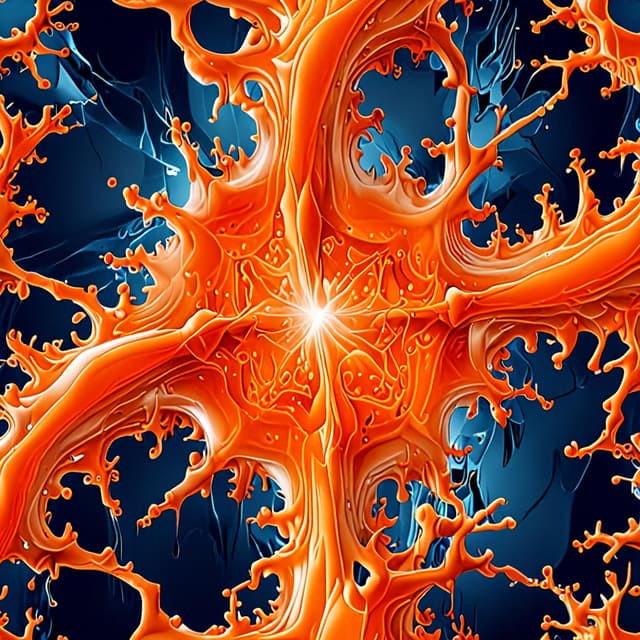
One of the most immediately noticeable differences of this parallel ice is its vivid reddish-orange hue, in stark contrast to the clear or white ice we are accustomed to. This coloration is the result of the ice's unique crystalline structure, which forms complex, branching fractal patterns rather than the simple hexagonal lattices found in our universe.
These elaborate, three-dimensional ice crystals scatter light in complex ways, giving the material its distinctive reddish tone. The fractal-like structures also lend the ice an almost organic, living quality, with the crystals appearing to grow and move in mesmerizing ways. This has made parallel ice a prized material for artistic and decorative applications, with intricate "ice sculptures" being a celebrated artform.
Perhaps the most counterintuitive property of this parallel ice is its higher density compared to its liquid counterpart. Unlike the ice we know, which floats atop water, this reddish ice sinks rapidly when submerged. This is due to subtle differences in the molecular bonding and crystalline packing within the ice, resulting in a denser solid form.
This inverted buoyancy has enabled a range of innovative applications, from advanced submarines and underwater habitats that utilize the ice's weight to their advantage, to unique forms of water-based transportation and construction. Bridges, piers, and even entire cities have been built by anchoring structures onto or within submerged "ice platforms."
One of the most transformative qualities of this parallel ice, however, lies in its unexpected electromagnetic properties. The fractal crystal structure of the ice, combined with its high density, allows it to effectively conduct electricity. This has enabled the development of a range of novel electronic and energy technologies.
Parallel ice is used as a semiconductor material in advanced microprocessors, allowing for more compact and powerful computing devices. It is also employed in power grid infrastructure, where its conductive qualities facilitate the transmission of electricity over long distances with minimal losses. Furthermore, the ice's piezoelectric effects - the generation of an electric charge in response to mechanical stress - have led to its use in renewable energy systems that harness the motion of water to produce power.
The unique properties of this parallel ice have even influenced the evolution of lifeforms in its world. Aquatic organisms have adapted to thrive in and around the dense, conductive ice, developing specialized structures and behaviors to navigate the inverted buoyancy and leverage the material's electronic properties.
Some marine species, for example, have evolved the ability to generate and detect electrical fields, allowing them to sense their environments and communicate in novel ways. Other creatures have adapted adhesive or gripping mechanisms to cling to the ice's fractal surfaces, while some even incorporate the ice crystals into their own bodily structures for protection or locomotion.
The transformative nature of this parallel ice has profoundly impacted the societies and civilizations that have arisen in this alternate universe. The material's unique properties have enabled technological leaps in fields ranging from transportation and construction to energy production and computing. This, in turn, has reshaped economic, political, and cultural landscapes in ways that diverge significantly from our own world.
Whether used in the development of advanced underwater infrastructure, the generation of clean electricity, or the creation of powerful electronic devices, this parallel ice has become a cornerstone of technological progress. As a result, the communities and cultures that have learned to harness its potential have risen to new heights of prosperity and innovation, establishing radically different trajectories of human development.
While the ice of our own reality remains a familiar, if essential, part of our world, the reddish, fractal-patterned ice of this parallel universe stands as a remarkable testament to the diversity of physical realities that may exist beyond our limited understanding. Its transformative impact serves as a thought-provoking reminder of the profound influence that even subtle variations in the fundamental laws of nature can have on the course of an entire world.
